For a lot of people, having a bit of time to themselves is the ultimate luxury.

It’s a chance to finally switch off the social radar, stop performing for other people, and just exist in peace. However, let’s be real—that’s not the case for everyone. For some, the second the front door clicks shut, and the house goes quiet, a weird kind of tension starts to build.
If you find yourself constantly reaching for your phone or looking for a distraction the moment you’re solo, you’re probably not as comfortable in your own skin as you’d like to think. Learning to be okay without an audience is a massive life skill, but if you’re experiencing these feelings, it’s a sign you’ve still got a bit of work to do.
1. Panic sets in the moment the room goes quiet.

If the mere thought of a Friday night with no plans has you breaking out in a bit of a cold sweat, you’re definitely struggling with solitude. It’s just you and your own thoughts, not a scene from a thriller, yet your brain starts treating the silence like an emergency. You start frantically scrolling through your contacts or checking group chats just to feel a sense of connection. The immediate rush of anxiety is a clear sign that you’re using other people as a buffer to avoid sitting with yourself.
2. You’re hit by a wave of massive boredom.

If you’re climbing the walls after only five minutes of being alone, it shows you haven’t really developed the ability to entertain yourself. You might feel like life is only happening when you’re out and about or chatting with mates. When that’s taken away, the world feels incredibly flat and dull. This kind of boredom is usually a mask for restlessness; you don’t know what to do with your own energy when there’s nobody there to reflect it back at you.
3. You have a desperate need to text everyone.

If your first instinct when you’re solo is to send out a mass “what are you up to?” text, you’re likely a tad too dependent on other people for your sense of well-being. It’s like you need a constant digital tether to the outside world just to prove you still exist. Your phone becomes a lifeline rather than a tool, and the silence of a notification-free screen feels heavy and rejecting. Taking a break from the screen is vital, but for you, it feels like being cut off from oxygen.
4. You feel guilty for not being productive.

If you can’t just sit on the sofa without feeling like you should be doing the laundry, answering emails, or ticking off a to-do list, you’re missing the point of me-time. You’ve been conditioned to think that your value is tied to your output, so when you’re alone, you feel like you’re wasting time if you isn’t being useful. Staring at the ceiling or just daydreaming is actually a brilliant way to let your brain reset, but you treat it like a moral failure.
5. Your brain turns into a hamster wheel of overthinking.

The second there’s no conversation to distract you, your mind starts replaying every life decision you’ve ever made. You begin to obsess over “what ifs” and should haves until you’ve worked yourself into a right state. Alone time should be a chance to find a bit of mental clarity, but for you, it turns into a marathon of self-doubt. This happens because you haven’t learned how to quiet that inner critic when there’s no external noise to drown it out.
6. FOMO starts to eat you alive.

If you’re constantly checking Instagram stories to see what everyone else is doing, you’re not actually being alone—you’re just being a spectator. You start to imagine that everyone is having the most life-changing night ever while you’re “stuck” at home. This fear of missing out is a sign that you value the shared experience way more than your own company. The truth is, most of those people are probably just having a mediocre drink and looking at their phones too.
7. You get the urge to clean everything in sight.

While a tidy flat is a lovely thing, if you only start scrubbing the skirting boards when you’re left alone, it’s probably a distraction technique. You’re using physical work to avoid having to sit still and listen to what’s actually going on in your head. It’s a productive form of avoidance, but it’s still avoidance. If you can’t relax until every speck of dust is gone, you’re just creating chores to stay busy so you don’t have to be alone with your thoughts.
8. Loneliness creeps in quickly.

There’s a massive difference between being alone and being lonely, but for you, the two are basically the same. The moment the last visitor leaves, a sense of isolation starts to settle in, and it feels quite heavy. This usually happens because you haven’t built a strong enough relationship with yourself to feel like you’re in good company when you’re solo. You’re looking for external validation to fill a gap that only self-acceptance can really fix.
9. You start imagining worst-case health scenarios.
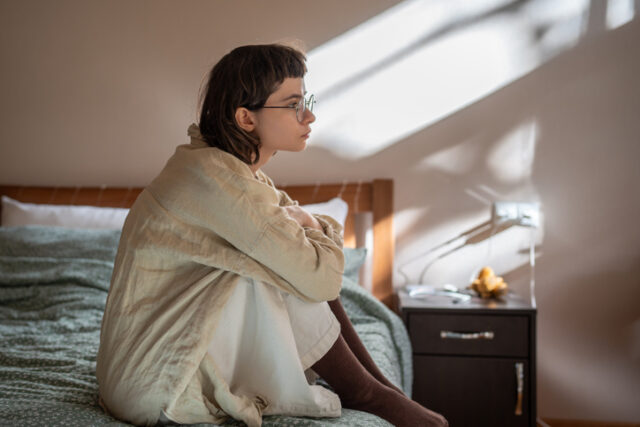
Without anyone around to talk to, you might start noticing every little twinge or ache in your body. Before you know it, you’ve spent three hours on a health forum and convinced yourself you’ve got a rare tropical disease. This is just another way your brain creates drama to fill the silence. When you’re distracted by other people, you don’t notice these things, but in the quiet, your mind looks for something—anything—to fixate on.
10. You get the sudden urge to call parents or exes.

If you find yourself wanting to ring your mum at 2 am for a deep chat or, even worse, contemplating a “hey” text to an ex, you’re definitely just trying to fill a void. You’re looking for a hit of familiarity to take the edge off the solitude. Reaching out to the past is usually a sign that you’re feeling vulnerable in the present, and you’re hoping a bit of nostalgia will make you feel more secure.
11. You start questioning your entire personality.

It’s a bit strange, but when there’s nobody around to witness your jokes or your stories, you might start wondering if you’re actually funny or interesting at all. You’ve spent so much time performing for an audience that you’ve forgotten your personality doesn’t just evaporate when the room is empty. You’re still the same person; you’re just not getting that immediate feedback you’ve become addicted to. If you need other people there to feel like a real person, you haven’t quite mastered the art of being yourself for yourself.
12. An urgent need to start new projects sets in.

Suddenly, at 9 p.m. on a Tuesday, you decide you absolutely must learn how to knit a jumper or become fluent in Japanese. While picking up new hobbies is brilliant, doing it as a panic response to a quiet evening is a bit of a red flag. You’re trying to bury the silence under a mountain of new tasks so you don’t have to face the restlessness. It’s a way of staying “on” even when you should be winding down, and it usually leads to a house full of half-finished projects and a brain that’s still just as frazzled.
13. You start oversharing on social media.
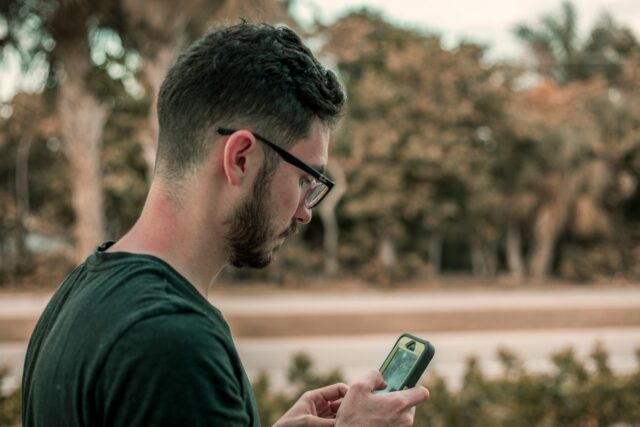
If your Instagram stories start looking like a minute-by-minute documentary of your solo evening, you’re definitely craving a bit of a digital pat on the back. You’re looking for those little red notifications to prove that people are still out there and that you haven’t been forgotten. It’s a way to feel like you’re in a crowded room without actually having to leave the house. While it’s fine to post a snap of your dinner, doing it because you can’t stand the idea of nobody knowing what you’re up to is a sign you’re struggling.
14. You feel oddly vulnerable.

Without the presence of another person, you might find yourself checking the locks three times or jumping at every little creak the house makes. You feel exposed in a way that doesn’t really make sense, as if being alone makes you a target for every ghost and burglar in the neighbourhood. Unless you actually live in a horror film, you’re perfectly safe; it’s just your brain’s way of manifesting that internal unease as a physical threat. You’re not quite comfortable in your solo skin yet, so the world feels a lot more threatening than it actually is.
15. You start obsessing over social blunders you’ve made in the past.
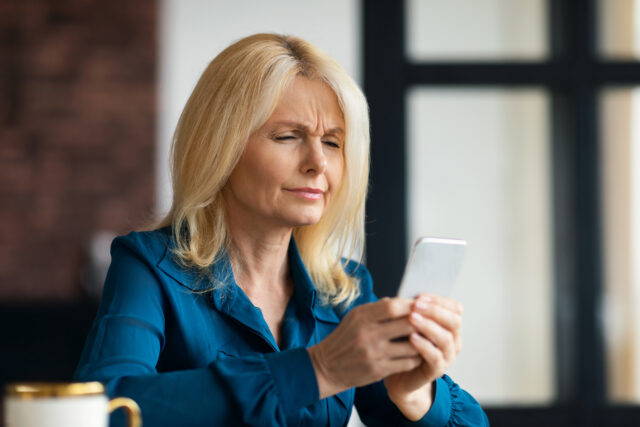
The quiet of a solo night can often act like a megaphone for your most cringeworthy memories. You’ll find yourself replaying that awkward thing you said in 2012 or wondering if your boss took that joke the wrong way three years ago. Without anyone to talk to, your mind turns inward and starts picking apart your past interactions. You’re not using the time to reflect; you’re using it to beat yourself up. Most of the people involved in those memories have long since forgotten them, so you should probably do the same.
16. You get the overwhelming urge to shop online.

When the boredom and the restlessness hit, the “add to basket” button can feel like a very quick way to get a hit of dopamine. You end up buying things you don’t even want just to feel the excitement of a delivery arriving in a few days. It’s a classic way to fill an emotional void with physical stuff, but it’s a very temporary fix. Your bank account won’t thank you for it, and the new stuff won’t actually make you feel any more comfortable with being alone once the novelty wears off.
17. You start planning elaborate social events.

Your quiet evening might turn into a three-hour session of organising a massive dinner party or a weekend away with 15 people. You’re overcompensating for your current solitude by filling your future calendar with as much noise as possible. It’s a way of reassuring yourself that you’re still popular and that this alone time is just a temporary glitch. While it’s lovely to have things to look forward to, you shouldn’t be using future plans to escape the reality of your current evening.
18. You feel like you’re wasting time.

If you can’t shake the feeling that every hour spent not socialising is an hour you’ll never get back, you’re missing out on a massive part of the human experience. There’s a lot of growth and peace to be found in the quiet moments, but you treat them like a missed opportunity. You’ve bought into the idea that real life only happens when you’re out in the world, but some of the most important realisations and resets happen when the noise stops. Time spent alone isn’t time wasted; it’s time invested in yourself.
19. You start questioning your relationships.

In the middle of a solo night, you might start wondering if your friends actually like you or if your partner is secretly bored. Without that constant reassurance of a conversation, your insecurities start to run wild. You’re projecting your own discomfort with yourself onto everyone else in your life. Your connections don’t become less solid just because you haven’t spoken to anyone in five hours. Trust that the people who care about you are still there, even when you can’t see them.
20. You feel an overwhelming sense of relief when alone time ends.

The biggest sign that you’re not okay with being alone is the sheer relief you feel the moment a friend calls or someone walks through the door. It’s like you’ve been holding your breath for hours, and you can finally exhale. While it’s great to see people, it shouldn’t feel like a rescue mission. Learning to enjoy your own company is a bit of a skill, and like anything else, it takes a bit of practice before it stops feeling like a chore and starts feeling like a rest.