Not all bad marriages come from bad people.

Sometimes it’s the “good guy”—respectful, hardworking, generally well-liked—who ends up making his partner feel unseen, unheard, or completely alone. It’s not always obvious from the outside, and it often leaves the other person second-guessing their pain. But the truth is, being a good man in theory doesn’t automatically make someone a good husband in practice. Here’s why that gap can show up, and how it slowly but surely wears down connection.
He assumes loyalty is enough.

He’s never cheated. He comes home. He pays the bills. In his mind, that’s what being a good partner looks like. The thing is, loyalty on its own doesn’t create emotional closeness. It just maintains a presence. When someone treats fidelity like a full personality trait, it can feel like they’ve clocked out of the rest of the relationship. Loyalty matters, of course, but it’s not the only measure of being emotionally available or supportive.
He’s emotionally blocked, but doesn’t see it.

He might not yell or shut down entirely, but that doesn’t mean he’s emotionally open. Some men never learned how to process their feelings beyond frustration or silence, and their partner ends up carrying the emotional weight of the relationship alone. When he says, “I don’t want to talk about it” to everything serious, it eventually becomes exhausting. Emotional safety doesn’t just mean not exploding—it’s about being present when it matters most.
He thinks providing equals intimacy.

For some men, acts of service or financial stability are their main love language. That’s fine… unless it becomes a substitute for actual emotional connection. “I work hard for this family” becomes the only thing they think they need to say. However, for their partner, intimacy might look like conversation, affection, or showing up in hard moments. When providing becomes the only way he participates, it can feel more like a job than a relationship.
He listens to respond, not to understand.

Good men can still be bad listeners, especially when they think they need to fix everything. Instead of just hearing what their partner is saying, they jump in with advice, dismissals, or a defensive counterpoint. This leaves their partner feeling unheard, even in conversations where no harm was meant. Sometimes people just need their pain or experience acknowledged, not solved, debated, or minimised.
He doesn’t know how to apologise properly.

Some men struggle to say “I’m sorry” unless they feel they’ve done something massive. They might think small hurts don’t count, or that good intentions cancel out bad impact. However, the strength of a relationship often lives in the micro-moments—the quick apology for a sharp tone, the check-in after an awkward silence. Without those, resentment builds, even if he thinks everything’s fine.
He expects appreciation without giving it.

He wants to feel valued, and fair enough. However, sometimes he forgets his partner does too. He might expect gratitude for mowing the lawn or being “not like other guys,” but go months without saying thank you for the everyday emotional labour she handles. Appreciation shouldn’t be a one-way street. If someone only notices effort when it comes from them, it slowly creates an imbalance that feels more like emotional neglect than love.
He sees disagreement as disrespect.
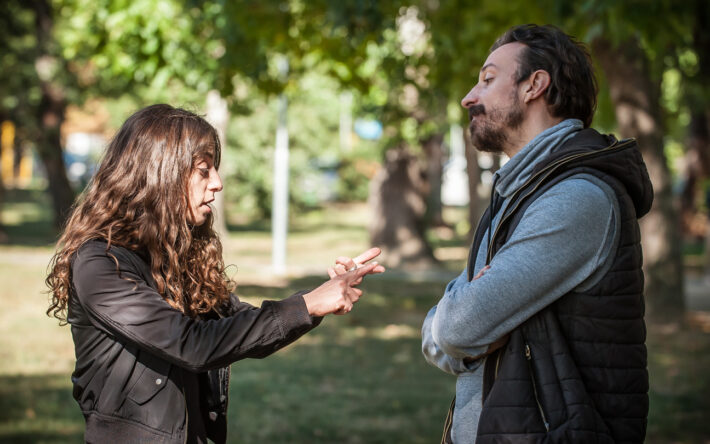
Good men can still have fragile egos. If every disagreement turns into a personal insult, it becomes impossible to have healthy communication. The conversation becomes about his feelings, not the actual issue at hand. This dynamic ultimately silences his partner, who learns that speaking honestly isn’t worth the emotional fallout. Eventually, this builds resentment and destroys trust, even if the relationship looks stable on the surface.
He doesn’t ask questions about his partner’s inner world.

He might know her coffee order, favourite film, or how she likes her toast, but not how she’s really feeling. If someone stops being curious about who their partner is beyond the day-to-day, emotional distance creeps in. When a husband stops asking, he stops seeing her as a full person. Relationships need curiosity to stay alive, especially when life gets busy or routine.
He avoids hard conversations until it’s too late.

Some men have been taught that peace means silence. So they’ll avoid every difficult conversation until things are boiling over, and by then, it feels like a crisis rather than a normal check-in. Relationships aren’t about always agreeing. They’re about being willing to show up, even when things feel tense. Avoidance might look calm on the surface, but it often builds resentment beneath it.
He relies too heavily on his “good guy” image.

Because he’s not abusive or blatantly unkind, he assumes he’s doing great. He might even use it as a defence: “I’m not that bad,” or “At least I don’t cheat.” But that bar is painfully low. Being a decent human is the bare minimum. If someone relies on their basic morality to excuse emotional laziness or avoid growth, the relationship will eventually feel hollow, even if they don’t mean to hurt anyone.
He takes his partner’s emotional labour for granted.

She remembers birthdays, manages the family calendar, smooths over arguments with the kids, and notices when things feel off. However, he doesn’t even register that she’s doing all that work because it just “gets done.” Good men can still live on emotional autopilot. If he never asks, never helps, and never acknowledges it, it stops feeling like a partnership and starts feeling like a subtle kind of burnout.
He can’t handle being vulnerable.

Being a husband means being emotionally available—not just strong, but open. Yet, many men have been taught to bottle things up, only letting them out in anger or silence. Vulnerability feels too exposed, too risky. Of course, without vulnerability, true intimacy doesn’t happen. His partner ends up feeling like she’s in love with a locked door—one she keeps knocking on, hoping someday it opens.
He sees the relationship as a finished product, not something evolving.

Some men treat marriage like a box ticked—you’re in it now, so what’s the problem? They stop doing the little things. Stop checking in. Stop making an effort. Relationships aren’t static. If one person is growing, changing, evolving—and the other refuses to adapt or engage—that gap widens fast. Eventually, it feels like living in two different worlds under the same roof.
He doesn’t understand the emotional cost of silence.

Sometimes it’s not what he says, but what he doesn’t. The lack of compliments, check-ins, affection, or interest doesn’t register to him, but it registers deeply to his partner. She starts feeling invisible. Not because he’s mean, but because he’s absent in all the ways that count. Silence can be just as painful as cruelty when it becomes the default.
He waits for problems to be obvious before acting.

He assumes everything’s fine unless she says otherwise. He doesn’t notice the small changes— the emotional withdrawal, the tiredness, the repeated requests to connect more deeply. And when she finally says something, he’s shocked. Being proactive emotionally is a skill. Good husbands don’t just react to problems. They notice the little signs and take them seriously. Waiting until it’s a crisis often means it’s already too late.
He forgets that love is shown in the small stuff.

Love isn’t always about the grand gestures. It’s in the daily care, the quiet moments, the effort to really see and respond to your partner. When those things go missing, love starts to feel more like a memory than a reality. Good men can forget this if they think love is something you say once and prove with loyalty. However, it has to be practised—often, and on purpose.