As a kid, your parents’ or other caregivers’ role is to look after you and keep you safe.

Sadly, that doesn’t always happen. When you grow up without the protection you needed—whether emotional, physical, or even just someone to notice what was happening—you start figuring things out on your own. You adapt fast, build your own defence systems, and take on roles you were never supposed to carry that early. Here are some things you likely learned to do as a result when you were still a child, all because no one stepped in when they should have.
1. You learned to read the room before you even entered it.

Long before you understood what was happening, your brain learned how to scan people’s moods and pick up on tension. You became hyper-aware of tones, looks, silences, constantly checking to see if it was a “safe” moment or one where you needed to shrink yourself.
This isn’t a skill you chose; it was survival. It taught you how to avoid setting things off, how to blend in when necessary, and how to predict other people’s behaviour so you could dodge the fallout. Even now, you probably do it without thinking.
2. You learned how to keep secrets that made you feel sick.

Maybe you were told not to tell. Maybe no one asked. Either way, you learned quickly that speaking up wasn’t safe or wouldn’t make a difference. So you swallowed things that were too big for a child to carry, and you did it quietly. That silence often follows people into adulthood. It shows up in the way you struggle to share, or how you minimise your pain, or how you still keep things to yourself because it’s what your body learned to do to survive.
3. You learned to comfort yourself when no one else did.
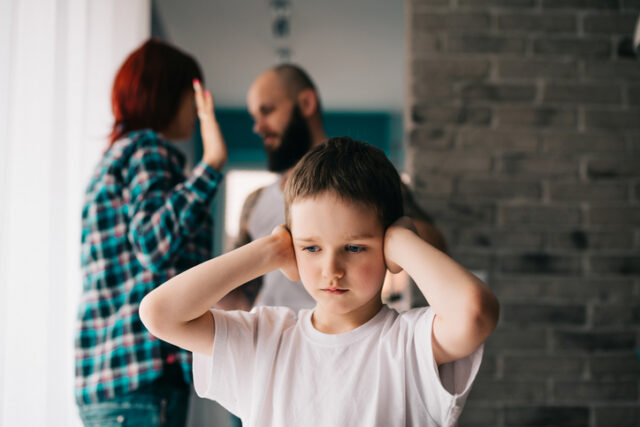
There were moments you cried, panicked, or got hurt, and no one came. So you figured out ways to soothe yourself. You might’ve rocked, hummed, dissociated, or just gone numb. Whatever it was, it became your version of a safety net. Self-soothing isn’t a weakness, but when it’s all you had, it becomes a habit that’s hard to unlearn. You might now find it difficult to accept comfort from other people, not because you don’t want it, but because you learned not to expect it.
4. You learned how to lie to protect yourself.

You weren’t trying to be deceitful. You were trying to survive. You figured out quickly which truths were too risky to share, which answers kept you out of trouble, and how to say what adults wanted to hear just to stay safe. As an adult, you might still downplay how bad things were. You might catch yourself avoiding honesty when it feels unsafe, even with people who aren’t dangerous. That habit didn’t come from nowhere; it came from a childhood where truth had consequences.
5. You learned to act older than you were.

You didn’t get to be a carefree kid. You had to grow up fast: take care of siblings, manage adult emotions, or calm situations way beyond your years. People praised your maturity, but they didn’t see it was built on neglect. That level of early responsibility can leave you with a deep sense of guilt around rest, fun, or asking for help. Even now, you might feel more comfortable fixing other people than being cared for yourself because that’s the role you were forced into far too young.
6. You learned how to disappear when things got bad.

Whether it was hiding in your room, zoning out during chaos, or becoming so quiet no one noticed you, you learned how to make yourself invisible. That was your way of dodging danger, by taking up as little space as possible. That instinct doesn’t just vanish. As an adult, you might withdraw when things feel tense, shut down during conflict, or feel uneasy when attention’s on you. Disappearing felt safer than being seen, and your nervous system hasn’t forgotten that.
7. You learned how to earn love by being useful.

Affection wasn’t always given freely. So you found other ways to feel wanted, by being helpful, obedient, talented, or the “easy” one. You became the fixer, the achiever, the one who never needed anything back. Now, you might notice how uncomfortable it feels to receive love that doesn’t come with strings. Because being loved just for existing isn’t something you were taught was possible. You learned to be needed instead of nurtured.
8. You learned not to cry in front of people.

If your emotions were ignored, mocked, or punished, you likely learned early on that crying made things worse. So you trained yourself to hold it in, to go numb, or to only cry when no one else could see. This coping mechanism often sticks around. You might still feel embarrassed or ashamed when you get emotional, even when you know it’s healthy. Because for a long time, your feelings weren’t just unsupported. They also felt like a threat.
9. You learned how to take care of adults.

When the adults around you were unstable, unpredictable, or emotionally immature, you became their caretaker. You soothed their moods, listened to their problems, and tried to keep the peace when it wasn’t your job.
This often leads to codependency in adulthood, feeling responsible for other people’s feelings, or struggling to set emotional boundaries. You were the adult in the room before your brain was even finished developing, and it left a lasting imprint.
10. You learned how to pretend nothing bothered you.

When you were dismissed or told you were “too sensitive,” you learned to shut down your reactions. You built a mask of being unbothered, not because you didn’t care, but because showing that you did made things harder. This might still show up now in the way you brush things off, joke about pain, or pretend you’re fine even when you’re not. It was a shield that kept you safe, but it also taught you to hide your real emotional world.
11. You learned how to expect disappointment.

You stopped getting your hopes up, even for things you wanted badly. Whether it was promises broken, affection withheld, or support that never came, you learned to brace for the letdown before it even happened. This expectation of disappointment can follow you everywhere. You might struggle to trust good things, sabotage your own happiness, or feel like happiness is something you’ll always have to pay for later. That’s not cynicism; it’s learned protection.
12. You learned how to apologise for things that weren’t your fault.

If you were made to feel like the problem, you probably got used to taking the blame just to keep the peace. Even when you knew deep down it wasn’t fair, saying “sorry” felt safer than defending yourself and escalating things. That habit sticks. As an adult, you might over-apologise constantly, second-guess yourself in arguments, or carry guilt for things that weren’t on you. It’s not weakness; it’s the survival instinct of someone who had to keep dangerous people calm.
13. You learned how to act like everything was normal.

Even when things were chaotic, confusing, or deeply wrong, you learned how to wear a smile and act like it was fine. Maybe it was to protect siblings, avoid attention, or just survive the day. Either way, you became good at pretending.
Now, you might find yourself minimising serious situations, downplaying your trauma, or telling stories with a laugh that once made you cry. That doesn’t mean you’ve healed. In reality, t means you had to normalise things that never should’ve been normal.
14. You learned how to depend only on yourself.

When you asked for help and didn’t get it, or when the help came with conditions or consequences, you stopped reaching out. You figured it was easier to just handle things alone, even when it was too much. This sort of hyper-independence often looks strong from the outside, but it comes from loneliness, and from learning that no one was coming. And while self-reliance is valuable, it can also make it hard to trust that letting people in won’t backfire.
15. You learned how to survive when no one taught you how to live.

So much of what you learned didn’t help you thrive. Instead, you just needed to get through the day, avoid danger, manage chaos, and stay small enough not to be a target. That’s not childhood. That’s survival training.
Now, you’re probably unlearning things while trying to teach yourself joy, softness, boundaries, and trust. It’s not easy, but the fact that you’re even trying means you’ve already broken a cycle. That matters more than most people will ever know.