When religion means something deep and personal to someone, it can be hard for them to understand why other people don’t share the same beliefs.

Unfortunately, sometimes that confusion turns into condescension, even if the person talking doesn’t realise it. These statements might sound pretty innocuous at first listen, but if you’ve ever been on the receiving end as a non-believer, you’ll know how patronising they can feel. Here are some of the most common ones, and why they generally tend to lead to an eye-roll instead of enlightenment.
1. “I’ll pray for you” (with that tone).
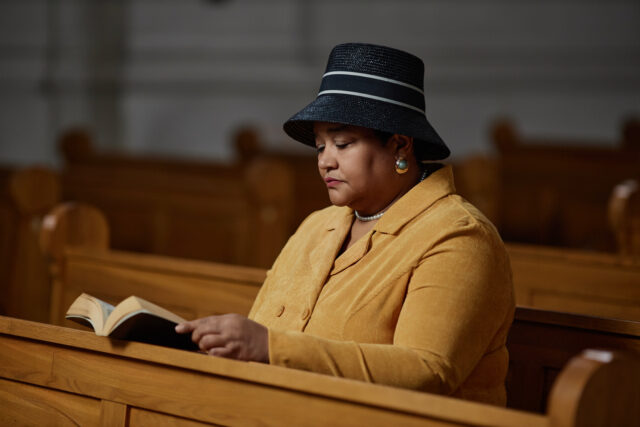
When it’s said with care, this can be a lovely gesture, but when it’s dropped mid-argument, after you’ve just explained you don’t believe in prayer, it feels less like kindness and more like a moral jab. It’s not support at all, but a way of saying, “You’re wrong, but I’ll fix it for you.”
It’s the tone that does the damage. Said with a smirk or a sigh, they’re not really wishing you well. In fact, it’s clear they’re pitying your lack of faith. If someone really wanted to be kind, they’d ask what kind of support you find helpful, not default to a ritual you didn’t ask for.
2. “You’ll come around eventually.”

This one assumes that belief is inevitable, like a phase you’re just too immature to grow into yet. It dismisses where you are right now and paints your current views as temporary or misinformed, rather than valid in their own right. It also quietly puts the religious person in the “wiser” role, as if they’ve already figured it out, and you’re just lagging behind. That kind of assumption doesn’t invite conversation. It shuts it down before it even starts.
3. “You just haven’t met God yet.”

This one pretends to be comforting, but it’s loaded with implication. It’s basically saying, “Your non-belief isn’t real; it’s just a waiting period.” It suggests that if you really looked hard enough or lived through enough suffering, you’d eventually “see the light.” What it misses completely is that plenty of non-believers have looked, questioned, explored, and still come to a different conclusion. Reducing that to a lack of experience oversimplifies something that’s usually been wrestled with deeply.
4. “I used to be like you.”

Ah yes, the classic one-upper. This often comes from people who think they’re relating, but it just ends up feeling smug. It implies that they’ve “evolved” past the mindset you’re still stuck in, and that your current perspective is just a less enlightened version of where they are now. Instead of treating your views as equal and valid, it turns the whole thing into a before-and-after story where you’re the “before.” It’s not really a conversation; it’s a humblebrag in disguise.
5. “Deep down, you know there’s something more.”

This one crosses into mind-reading territory. It assumes you don’t even understand your own beliefs, and that you’re suppressing some secret longing or truth that the religious person somehow has access to. It can be incredibly invalidating. It suggests your clarity is just denial, and their faith is your “real” truth, but you just haven’t accepted it yet. It’s not a respectful exchange. It’s a subtle way of saying, “You’re lying to yourself.”
6. “I’ll be praying for your soul.”

This goes a step further than a generic “I’ll pray for you.” It carries the implication that your soul is in danger, and that the religious person feels a responsibility to save it, whether you want them to or not. It’s dramatic, patronising, and not particularly helpful. Most non-believers aren’t wandering around worried about their soul, and even if someone was, this kind of phrasing usually shuts them down instead of offering anything genuinely supportive.
7. “God still loves you, even if you don’t believe.”

This one’s meant to sound generous, but it still centres the belief system as the universal truth. It’s like saying, “Even though you’re wrong, the divine still tolerates you.” It doesn’t sound as kind when you really unpack it. It also assumes the non-believer feels distant from something they don’t even subscribe to. It’s not reassuring, it’s alienating. Kindness doesn’t have to come packaged in theology. Sometimes just saying, “I respect your view” goes further.
8. “You must feel so lost without faith.”

This one’s a straight-up judgement disguised as concern. It assumes that not having a belief system means you’re emotionally adrift, or spiritually hollow. However, plenty of non-believers have strong values, deep purpose, and a clear sense of direction. It also frames religion as the only valid way to find meaning in life, which just isn’t true for everyone. Acting like someone’s incomplete without it is more patronising than helpful, especially when they feel completely fine without it.
9. “Faith is a gift, and some people just don’t receive it.”

This might sound poetic, but it’s basically saying, “I got something you didn’t.” It creates a spiritual hierarchy where believers are the chosen ones and non-believers are just out of luck. That’s superiority dressed in soft language. It takes something deeply personal and turns it into a competition, even if that’s not the intent. If someone doesn’t share your beliefs, that doesn’t make them spiritually deficient. It just means they have a different lens on life.
10. “I’ll ask God to open your heart.”

This usually pops up after a disagreement, when you haven’t “seen the light” fast enough. It implies that you’re spiritually shut down or emotionally blocked—again, not exactly respectful if someone just disagrees with you. The idea that belief equals openness and non-belief equals closed-mindedness is unfair and lazy. Plenty of people come to non-belief after years of questioning, openness, and reflection. It’s not a flaw. It’s just a different outcome.
11. “One day you’ll understand.”

There’s nothing like being told your current thoughts and beliefs are just a placeholder until you wise up. This line puts the speaker on a pedestal, as if they’re already enlightened, and you’re stuck at the beginners’ table, waiting for your upgrade. There’s no respect there. It’s a polite way of saying, “I know better.” If the goal is connection or conversation, this one shuts the door before it even opens.
12. “You’re rejecting the truth, not just religion.”

This goes past personal opinion and tries to turn belief into an absolute fact. It frames any disagreement as wilful ignorance, which makes it nearly impossible to have a two-way conversation. It’s not “you think differently”; it’s “you’re wrong, full stop.” That kind of rigidity makes people defensive, and rightly so. If someone genuinely wants to share their perspective, it helps to leave a bit of room for nuance. This statement wipes that out completely.
13. “Even atheists believe in something.”

This one tries to box everyone into a belief category, even if they’ve already stepped outside of it. It can feel like an attempt to pull you back into the framework of faith, whether you belong there or not. Just because someone values science, kindness, or community doesn’t mean they “believe” in it the same way religious people talk about belief. Sometimes it’s okay to let a different worldview stand on its own without trying to convert it into something familiar.
14. “What happened to you?”

There’s a lot packed into this one. It assumes something bad must have happened to make you reject belief, like pain or trauma is the only reason someone would ever stop being religious. It’s a question that comes wrapped in judgement. Yes, for some people, their loss of faith came from hardship, but for others, it was curiosity, logic, or simply growing out of something that didn’t fit. Assuming damage instead of difference is just another way to invalidate someone’s experience.
15. “I hope you find what you’re looking for.”

This one might seem well-meaning, but it still carries a slight smugness. It suggests the other person is searching for something they haven’t yet found, when maybe they’re not searching at all. Maybe they’ve already found peace in their non-belief. It also quietly frames the religious person as someone who has the answer, watching you stumble toward it. If you genuinely care, it’s better to ask what someone values or believes in, not assume they’re lost and flailing.
16. “God works in mysterious ways—you’ll see.”

This tends to pop up when someone’s going through something hard, and it can honestly feel a bit dismissive. Instead of offering empathy or just sitting with someone’s pain, it tries to slap a neat explanation on something messy. It also assumes you’ll have a faith-based revelation somewhere down the line, whether you’ve asked for that or not. It might be comforting to the person saying it, but to the person hearing it, it often just feels like being talked over.