Being present as a dad is a whole lot more than just showing up physically.

Emotional presence is what makes children feel safe and loved. It may not come as naturally to some fathers as it does to many mothers, but the idea that men aren’t as capable of connecting on a deep emotional level with their kids is rubbish and needs to go. If you feel disconnected from your kids and don’t quite know why, here’s where you’re going wrong, as well as some suggestions for what to do about it.
1. You avoid talking about feelings.

When your child wants to share, you steer the conversation back to practical matters. This makes emotions feel unwelcome, leaving your child unsure if they can really turn to you when they’re struggling.
Welcoming emotions starts with listening. Dads who simply acknowledge feelings without rushing to fix them show children that their inner world matters, which lays the groundwork for stronger trust and openness.
2. You prioritise work over connection.

It’s easy to believe providing is the same as parenting, but if work always comes first, your child can start feeling like an afterthought. That distance slowly eats away at the bond you share. If you never spend time with them, you can’t get to know them, and you certainly can’t be around for important moments in their lives.
Balancing priorities shows love clearly. Most kids remember time and presence more than material things, so carving out moments just for them strengthens the relationship far more than another late night at work.
3. You struggle with physical affection.

Hugs or casual touch feel awkward, so you avoid them altogether. While it might not seem important, children read that absence as rejection, even when you don’t mean it that way. It might not come as naturally to a lot of dads, but the more you do it, the easier it becomes.
Starting with small gestures helps bridge the gap. A pat on the back or brief hug shows warmth, and as you practise, comfort with physical closeness often grows naturally.
4. You give advice instead of empathy.

When your child shares a problem, you jump straight into solutions. This leaves them feeling unheard because sometimes they don’t want fixing. Really, they just want understanding. They want to feel like someone who cares about them hears them out and understands them (or at least tries).
Slowing down changes everything. Dads who stop to reflect feelings back before offering advice teach children that their emotions are valid, which creates safety as well as guidance.
5. You avoid tough but necessary conversations.

Topics like sadness, conflict, or mistakes get brushed aside. While this feels protective, it teaches kids to bury feelings instead of facing them, which can harm their confidence down the line. Honesty even in the face of awkwardness or discomfort is incredibly important.
Facing discomfort head-on sets a better example. Talking through difficult issues calmly shows children emotions aren’t dangerous, which helps them feel supported instead of silenced.
6. You stay emotionally distant during arguments or disagreements.

Arguments make you withdraw completely, leaving your child unsure of where they stand. Emotional absence during fights feels like abandonment, even if that’s not your intention. You might think it’s better than being explosive, but your kid wants to see that you’re engaged in what’s happening, at the very least.
Staying engaged builds resilience. Dads who model calm communication in tense moments show children that disagreements don’t equal rejection, which teaches them healthier conflict skills, too.
7. You rarely share your own feelings.

Your child never hears how you feel, so emotions seem off-limits. The lack of openness keeps the relationship shallow because your child doesn’t know who you are beneath the surface. You might think it’ll make you look weak to share what’s going on inside of you, but that’s just modelling healthy emotions.
Sharing appropriately deepens connection. Even simple admissions like “I feel tired today” or “That made me proud” give your child permission to do the same, which breaks down the wall between you.
8. You dismiss emotional displays.

Tears or anger from your child make you uncomfortable, so you tell them to stop. This sends the message their emotions are unacceptable, which builds shame instead of security. It also teaches them to shut down and bottle things up, which is never healthy.
Validation changes the outcome. Dads who say “I see you’re upset” or “It’s okay to cry” help kids feel safe expressing themselves, which strengthens their emotional confidence.
9. You rely on discipline more than conversation.
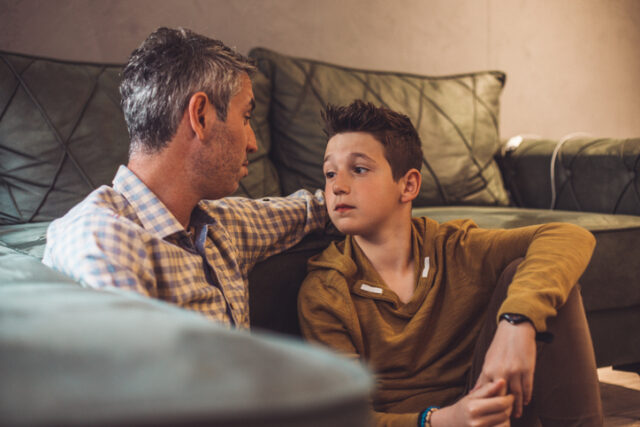
Rules and consequences take centre stage, while conversations take a back seat. In the long run, this creates fear instead of respect, and your child learns to hide mistakes rather than share them. They should know you’re a safe space to come to even when they mess up.
Blending structure with dialogue works better. Dads who explain decisions and listen to their child’s perspective show that discipline and empathy can coexist, which encourages respect on both sides.
10. You struggle to apologise even when you’re clearly wrong.

Mistakes happen, but if you never admit them, your child learns you’re emotionally out of reach. Refusing to apologise creates a wall that keeps them distant from you. You just seem stubborn rather than mature.
Apologies build trust. Dads who own up to errors prove that vulnerability is strength, which teaches children accountability without fear of disconnection.
11. You hide behind humour.

Every serious topic gets deflected with a joke, no matter what. While laughter is valuable, using it to dodge emotions leaves your child uncertain about whether they can bring real struggles to you.
Mixing humour with honesty creates balance. Dads who allow space for seriousness alongside laughter show their children that fun and depth can coexist in the same relationship.
12. You avoid celebrating your kid’s small wins.

Achievements pass by without recognition because you don’t see them as anything major. Yet to your child, the lack of acknowledgement feels like emotional neglect, which slowly destroys their confidence.
Noticing little victories matters. Dads who praise effort and progress, not just big outcomes, give their children the encouragement they need to keep growing stronger.
13. You rarely initiate connection.

You wait for your child to come to you, so interactions feel one-sided. That lack of initiative makes your kid feel like they’re always chasing your attention, rather than it being something you’re interested in giving them freely.
Taking the lead reverses that pattern. Dads who initiate chats, games, or outings prove to their children they’re wanted, which breaks the cycle of emotional absence.
14. You keep boundaries too rigid.

Structure is important, but when rules dominate every interaction, warmth gets lost. Kids end up feeling like they live with a manager instead of a parent. All kids need a bit of leeway to explore the world.
Balancing firmness with flexibility brings closeness. Dads who explain rules while showing affection prove that boundaries can protect without pushing children away.
15. You feel numb instead of connected.

Spending time together feels hollow because you’re physically present but emotionally checked out. Your numbness leaves your kids feeling unseen, even if you’re right there in the room, and that’s not a good thing.
Re-engaging requires small, consistent steps. Dads who focus on eye contact, open conversation, and shared activities find connection slowly returns, proving that change is always possible with effort.