If you were raised in a house that prioritised faith, chances are, that’s stuck with you over the years.

It doesn’t matter if you’ve not been to church in decades or if you swore off religion once you left home—the patterns it created in you don’t just disappear overnight. They’re woven into how you think, what you fear, and the invisible rules you didn’t even know you were following. Whether you’re agnostic or even an atheist now, chances are, you still experience these things thanks to your religious upbringing.
1. Guilt shows up over the weirdest things.

You’ll feel guilty about stuff that objectively doesn’t matter, like sleeping in on Sunday or enjoying yourself too much. There’s this low-level anxiety that pleasure needs to be earned or punished, even when you know that’s ridiculous.
The guilt response was trained into you early, and it doesn’t need logic to keep firing. Recognising where it comes from helps, but don’t expect it to vanish completely. You’re basically retraining your brain’s alarm system, and that takes time.
2. You struggle with the idea of being enough.

Religious teaching often centres on being inherently flawed or sinful, always needing to improve or repent. Even when you’ve rejected that belief intellectually, there’s still this feeling that you’re fundamentally not quite good enough as you are.
It’s exhausting constantly trying to prove your worth to yourself. The change happens when you start noticing that voice and questioning whether you’d talk to a mate that way. You’re allowed to just exist without needing to justify it.
3. Doubt feels dangerous instead of healthy.

Questioning things was probably discouraged growing up, so now doubt feels like failure rather than part of learning. You might notice you’re uncomfortable sitting with uncertainty or changing your mind, even about small things that don’t really matter.
Letting yourself not know the answer is actually a skill you can build. Good critical thinking requires doubt, and being wrong about something doesn’t make you a bad person. It just makes you human and willing to learn.
4. You’ve got weird shame around your body.

Whether it was modesty rules or teachings about purity, you probably absorbed messages that your body was somehow shameful or dangerous. That shows up in how comfortable you are with physical affection, sex, or even just existing in your own skin.
Unlearning body shame is truly hard work because it goes so deep. It helps to remember that those rules were about control, not morality. Your body isn’t sinful, it’s just a body doing normal body things.
5. You’re terrified of being selfish.

Self-sacrifice was probably praised as the highest virtue, so now setting boundaries or prioritising yourself feels morally wrong. You’ll run yourself into the ground helping everyone else while your own needs get ignored because that’s what good people do, right?
Actually, looking after yourself isn’t selfish, it’s necessary. You can’t pour from an empty cup and all that, but more importantly, your needs matter just as much as anyone else’s. Saying no doesn’t make you a bad person.
6. Authority figures make you weirdly compliant.

You were taught to respect and obey authority without question, so now you struggle to challenge bosses, doctors, or anyone in a position of power. Even when they’re clearly wrong, there’s this automatic deference that kicks in.
Learning to advocate for yourself means pushing through that discomfort. Authority figures are just people who can be wrong, biased, or misinformed. Asking questions or disagreeing isn’t disrespectful, it’s being an adult with your own valid perspective.
7. Black and white thinking dominates everything.

Religion often deals in absolutes, good versus evil, right versus wrong, saved versus damned. That binary thinking sneaks into how you judge yourself and everyone around you, leaving no room for the messy grey areas where most of life actually happens.
Reality is complicated and contradictory, and that’s okay. Someone can be good in some ways and flawed in other people. You can make a mistake without being a terrible person. Learning to sit with complexity is uncomfortable, but it’s also more honest.
8. You’re obsessed with what everyone else thinks.
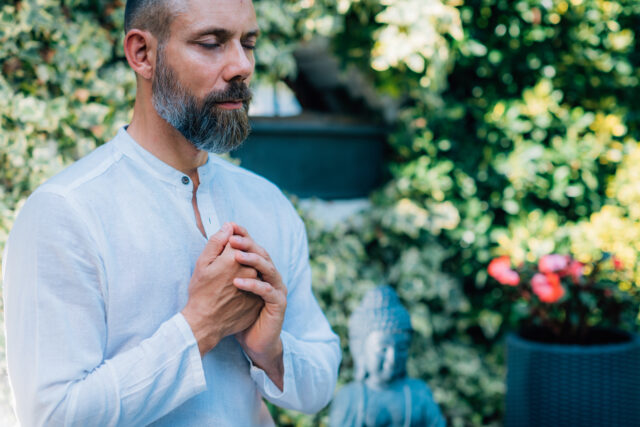
When your community’s approval determined your worth, you learned to monitor yourself constantly through other people’s eyes. Now you’re still performing for an invisible audience, worrying about judgement even when no one’s actually watching or caring.
Most people are too busy worrying about themselves to judge you as harshly as you think. That running commentary about what everyone else might think is just old programming. You’re allowed to live for yourself, not an imaginary tribunal.
9. Existential dread hits differently at night.

Losing the framework that explained everything, especially death and meaning, can leave you with a specific kind of anxiety. The universe feeling random and temporary isn’t comforting when you were promised cosmic justice and eternal life.
Finding meaning without religion is possible, it just looks different. You get to decide what matters, rather than having it handed to you. That’s actually more authentic, even if it feels scarier at first. You’re building your own purpose now.
10. You can’t celebrate achievements properly.
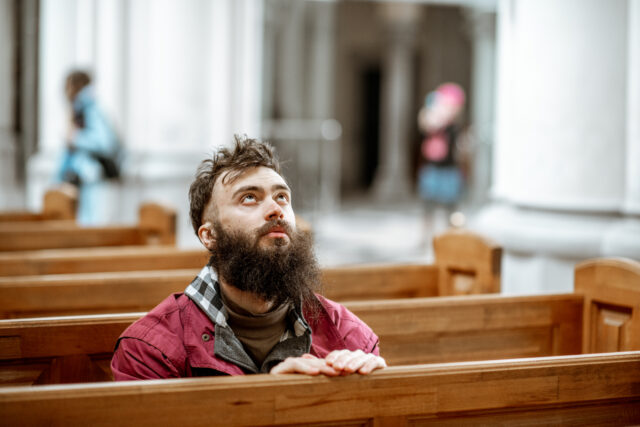
Pride was probably taught as a sin, so now when you do something brilliant, you immediately downplay it or deflect. You’ve learned to make yourself smaller rather than own your accomplishments because drawing attention feels dangerous or wrong.
Your achievements are worth celebrating without qualification. Being proud of yourself isn’t arrogance, it’s healthy self recognition. You worked hard for what you’ve done, and you’re allowed to feel good about it without immediately shrinking back down.
11. Perfectionism runs your whole life.

When you were taught that God sees everything and judges every thought and action, you learned that anything less than perfect was failure. Now you hold yourself to impossible standards and beat yourself up over tiny mistakes.
Perfectionism isn’t about being good, it’s about avoiding shame and criticism. Done is better than perfect most of the time, and mistakes are just information, not moral failings. You’re allowed to be human and messy and still completely worthy.
12. You’ve got complicated feelings about community.

Religious communities often provided built in belonging and purpose, so leaving can feel like you’ve lost your people. You might struggle to find that same sense of connection elsewhere, or feel suspicious of groups because you know how they can go wrong.
Building community outside religion takes more effort because it’s not automatically provided, but it can be healthier too. You get to choose who you connect with based on actual compatibility rather than shared doctrine. It’s slower but often more genuine.
13. Anger feels completely forbidden.

You were probably taught to forgive immediately, turn the other cheek, and that anger was sinful or dangerous. Now you suppress it until you’re either numb or it explodes sideways because you never learned that anger can be healthy and informative.
Anger tells you when your boundaries are crossed or something’s unfair. It’s not a sin, it’s data about what matters to you. Learning to feel it without either suppressing it or letting it control you is part of becoming emotionally whole.