Kids don’t always say “I’m sad” outright—it could manifest in silence, tantrums, clinginess, or even jokes.

As parents, even the most well-meaning ones, it’s easy to miss or unintentionally brush past those signs, especially when we’re tired, distracted, or simply trying to keep everything running. However, if a child regularly feels like their sadness isn’t taken seriously, they may stop bringing it up altogether. Here are some subtle ways you might be dismissing their feelings, even if your intention is to help.
1. You instantly try to cheer them up.

Saying things like “don’t be sad” or “look on the bright side” seems helpful, but it often sends the message that sadness is something to get over quickly, not something to sit with or understand. Instead, try acknowledging the feeling first. You can say, “That does sound really hard,” before offering comfort. Fixing their mood isn’t what’s important. It’s making them feel safe being real.
2. You tell them it’s “not a big deal.”

To a child, small things are big. Losing a toy or being left out at lunch might seem minor to an adult, but for them, it’s their whole world in that moment. Minimising their experience can make them feel silly or overdramatic. A better response is, “That really upset you, didn’t it?” It shows you’re trying to see it from their level.
3. You compare their sadness to someone else’s.

“Some kids have it way worse” or “At least you’re not…” can feel like perspective-building, but it often lands as dismissive. It tells them their pain isn’t valid unless it reaches a certain threshold. Children need to know that their emotions matter, regardless of what anyone else is going through. You can teach empathy later—right now, just be present for their experience.
4. You rush them to move on.

If you find yourself saying, “Okay, that’s enough crying,” or trying to distract them too quickly, it may be your own discomfort talking, not what they need. Letting them take the time they need to express the sadness—without rushing to end it—teaches them that emotions aren’t problems, they’re messages. It’s okay to feel them fully.
5. You use logic when they need comfort.

When kids are sad, saying things like, “But remember, we’re going again next week!” might seem like a helpful reminder, but often it just makes them feel unheard in the moment. They’re not looking for schedules or facts—they want emotional connection. Try saying, “I know you were really looking forward to today. It’s okay to be upset about that.”
6. You tease them when they’re upset.

Light teasing might seem like a way to lighten the mood, but if your child’s genuinely sad, it can feel like you’re mocking them instead of listening. Even well-meant jokes can land as dismissive when someone’s feeling vulnerable. Let the moment be serious if they need it to be, and save the humour for when they’ve come out the other side.
7. You assume they’re being “too sensitive.”

Labelling your child as overly sensitive can make them feel like their emotions are a flaw. It teaches them to second-guess their feelings instead of trusting them. If your child reacts strongly, it’s likely because they feel strongly. Instead of correcting that, try being curious. Ask what’s making the feeling so big for them right now.
8. You prioritise discipline over connection.

If a child is acting out because they’re sad and the focus immediately goes to punishment, the root feeling often gets overlooked entirely. Try asking, “What happened before this?” or “How were you feeling when that happened?” It shows you’re not just reacting to behaviour, but tuning in to what’s underneath it.
9. You talk more than you listen.

Sometimes we jump in with advice, reassurance, or explanations so quickly that we don’t actually hear what our child is trying to say. Give them space to finish their thoughts, even if they ramble. Silence might feel awkward, but it gives them time to find their own words, which is part of learning to express themselves.
10. You reward them for “being tough.”

Comments like “You’re so brave, you didn’t even cry!” might sound like praise, but they can also imply that showing emotion is weak or disappointing. Instead, celebrate the vulnerability too. Say, “It’s okay that you cried—feelings come out when they need to.” This helps build emotional resilience, not just stoicism.
11. You jump into problem-solving mode.

It’s natural to want to fix things, but sadness isn’t always a problem to solve. Sometimes, it just wants to be felt and shared. Before offering a solution, try asking, “Do you want help with this or just someone to listen?” Letting them choose gives them a sense of control and respect.
12. You tell them to be grateful.
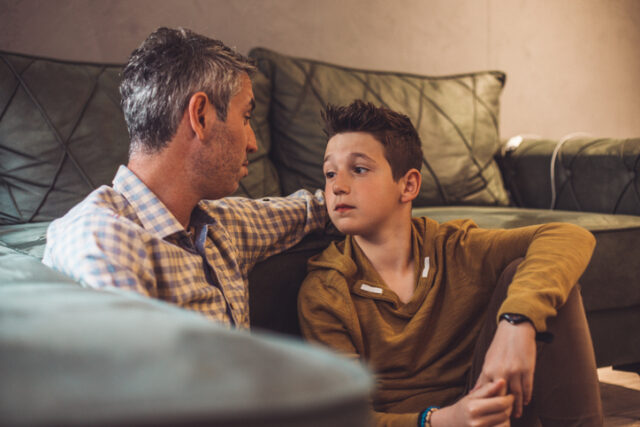
Gratitude is important, but not at the cost of invalidating sadness. Saying things like “You have so much to be thankful for” can feel like a shutdown rather than support. Let them feel low without guilt. Once the emotion passes, you can help them reflect on the positives, but in the moment, empathy should come first.
13. You assume they’ll “get over it.”

It’s true that kids are resilient, but assuming they’ll bounce back on their own without support can leave them feeling isolated. Check in, even after the tears stop. Ask how they’re feeling the next day, or if they want to talk more. It shows their emotions aren’t something you tune out once they’re quiet.
14. You avoid emotional conversations altogether.

If talking about feelings makes you uncomfortable, your child will pick up on that, and might stop coming to you when they’re struggling. Start small. You don’t need perfect language, just honesty. Saying, “I’m still learning how to talk about feelings too” can go a long way in making those talks feel safe and human.