You wouldn’t think birth order has anything to do with brain power, but it actually does.

Birth order might seem like a random roll of the dice, but it actually has a surprising amount of influence over how your brain develops. According to a study in the Journal of Human Resources (via The Guardian), firstborn children consistently land higher scores in reading and vocabulary tests compared to their younger siblings.
Researchers aren’t entirely sure why this gap exists, but it likely comes down to the environment at home rather than anything in the water. When you’re the first one through the door, your upbringing looks completely different from the kids who come after you, and those early years of being the sole focus of the household seem to leave a permanent mark on your cognitive skills.
1. They’ve got their parents’ undivided attention.
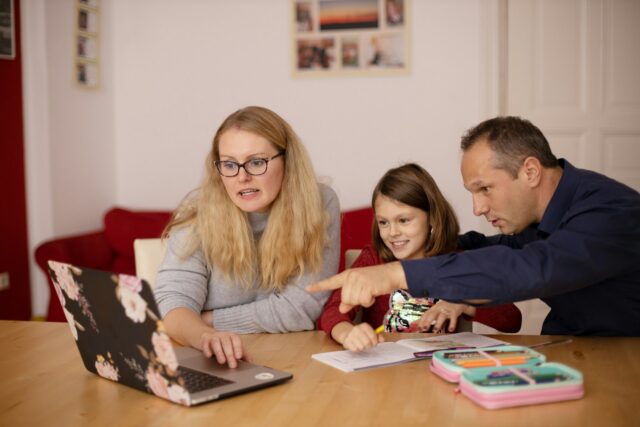
For a good chunk of their early life, firstborns are the sun that the entire family orbits. They have two adults hanging on their every word, celebrating every time they manage to use a spoon or say a new syllable. Without any siblings to compete with, they get 100% of the engagement and interaction available, which basically gives their brain a massive head start before the house gets crowded.
2. They’re the guinea pigs for parenting experiments.

New parents are usually terrified and over-eager, which means the first child is subjected to every “genius-making” hack in the book. Whether it’s playing classical music to the bump or buying every educational toy on the market, the eldest gets the brunt of the effort. By the time the second or third kid rolls around, the parents are usually just happy if everyone is fed and has matching socks.
3. They’ve got to figure things out on their own.

Without an older brother or sister to show them how things work, the eldest child has to rely on their own wits to navigate the world. They’re the ones who have to invent a way to reach the biscuit tin or figure out how to climb the stairs safely. This constant need to solve problems from scratch is basically a full-time training session for their critical thinking skills.
4. They’re often given more responsibility early on.
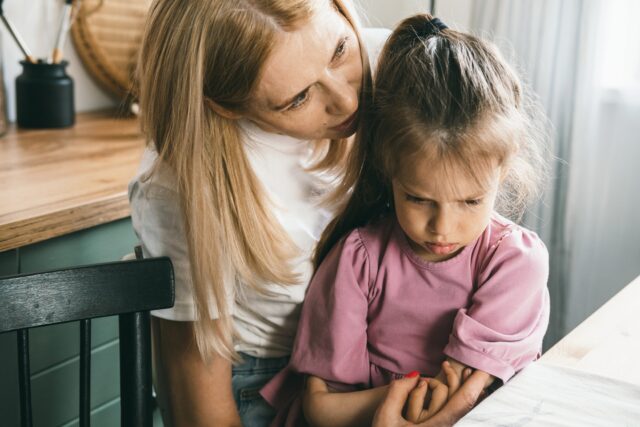
Being the biggest usually means being put in charge of the smaller ones, which is a crash course in management. Firstborns often find themselves negotiating peace treaties over toys or making sure their siblings don’t do something daft. It’s like a miniature leadership program where the stakes involve nappies and tantrums instead of quarterly reports.
5. They’ve got to set the bar high.

Parents often put their most intense expectations on the firstborn because they haven’t learned to relax yet. There is a lot of pressure to be the one who paves the way and makes the family look good. While that can be stressful, that constant push to achieve often sharpens the mind and makes the eldest child more likely to aim for the top in school or work.
6. They get to be the teacher.

One of the best ways to learn something is to explain it to someone else. When a firstborn helps a younger sibling with homework or explains why the sky is blue, they are actually reinforcing that knowledge in their own head. They spend their childhood in a constant revision session, which helps them process information much more clearly than the kids who are always being told what to do.
7. They have to be creative with entertainment.

Before siblings arrive, firstborns spend a lot of time having to entertain themselves. Without a built-in playmate, they become masters of imagination and can turn a cardboard box into a spaceship or a marker pen into a magic wand. That early independence encourages a level of creativity and self-reliance that stays with them long after they’ve grown up.
8. They get more grown-up conversations.

Parents tend to speak more maturely to their first child, partly because they haven’t mastered baby talk yet and partly because there are no other kids to bring the conversation level down. The eldest child often grows up hearing adult vocabulary and complex ideas at the dinner table, meaning they’re picking up advanced language skills while the younger ones are still focused on cartoons.
9. They’re the family trailblazers.

Every milestone for a firstborn is a brand new experience for the whole family. They are the first to navigate the school system, the first to stay up late, and the first to get a phone. This constant exposure to newness means their brains are always adapting to unfamiliar situations, whereas the younger kids are just following a path that has already been cleared for them.
10. They’ve got a leg up on language skills.

Because their primary conversation partners are adults, firstborns often develop an extensive vocabulary much faster than their peers. By the time they start primary school, they might be casually using complex words while their younger siblings are still struggling with basic sentences. This early verbal advantage is one of the biggest factors in those higher test scores.
11. They’re the family guinea pigs for independence.

Parents are usually far more cautious and strict with the first kid, which inadvertently teaches them how to navigate boundaries. The eldest has to learn the art of persuasion and problem-solving just to get permission for a sleepover or a party. Working out how to convince a protective parent to let go a little is a masterclass in social strategy.
12. They get more one-on-one reading time.

In a quiet house with only one child, story time is a dedicated, uninterrupted ritual. Firstborns often get hours of focused reading from their parents, which builds a strong foundation for literacy. Once more kids are added to the mix, reading often becomes a chaotic group activity where everyone is fighting for a spot on the sofa, making it harder to focus.
13. They learn from their parents’ mistakes.

Parents are often Clueless with a capital C when they have their first child. The eldest has to learn to adapt quickly to their parents’ trial and error, which builds a lot of resilience. They see the mistakes being made in real time and have to figure out how to stay flexible as the house rules change on the fly.
14. They’re often more ambitious.

With so much focus and expectation heaped on them, firstborns frequently develop a massive drive to succeed. It’s not that they’re born more competitive, but they’ve spent their lives trying to live up to the version of themselves that their parents imagined. That internal engine keeps them moving toward goals that younger siblings might feel less pressure to hit.
15. They get a head start on school.

By the time the firstborn walks through the school gates, they’ve often had years of undivided attention that acts like private tutoring. They go into the classroom with a level of preparation that’s hard to match when you’re the third child and your parents are just trying to keep their heads above water. That early confidence in their own ability usually sticks.
16. They learn the art of negotiation early.

Being the first person to ever challenge the house rules makes the eldest child a master negotiator. They don’t have an older sibling to blame or a precedent to point to, so they have to build a solid case for whatever they want. By the time they hit their teens, they could probably broker a peace deal between world leaders.
17. They’ve got more pressure to succeed.

With no older sibling to set the bar, the firstborn is always the one flying the kite. They feel a natural weight to perform because they are the primary source of pride for the parents. While it’s a lot to carry, it often turns them into highly capable adults who are used to handling high-stakes situations without breaking a sweat.
18. They’re the test subjects for parental boundaries.

The firstborn is the one who has to find out exactly where the line is drawn, usually by crossing it and seeing what happens. This constant testing of the environment is a massive workout for their social and analytical skills. The younger kids eventually get a handbook on what they can get away with, but the eldest had to write that book themselves.