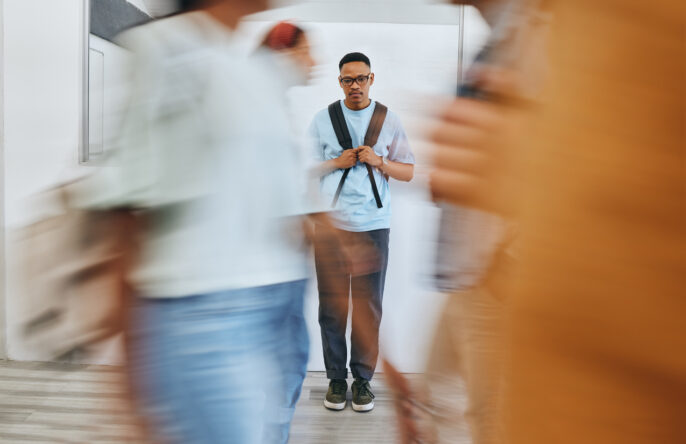
Feeling anxious in certain situations doesn’t always mean the same thing. Agoraphobia and social anxiety often get confused, yet they affect people differently. Understanding where they overlap and where they part ways can help you recognise what’s really going on.
Agoraphobia is about places, not people.
Agoraphobia centres on fear of certain environments, like open spaces, crowds, or places where escape feels difficult. The worry comes from being stuck somewhere unsafe, rather than from what other people might think of you. Social anxiety, however, is tied to people and judgement. It’s less about the setting and more about interactions, so the triggers feel different once you pay attention to them.
Social anxiety focuses on embarrassment.
With social anxiety, the core fear is being judged, embarrassed, or rejected. Everyday situations like eating in public, speaking up, or meeting new people can feel daunting because of the risk of humiliation. Agoraphobia doesn’t carry the same focus on embarrassment. Instead, it’s the fear of being unable to leave or find safety that drives the anxiety, even when no one else is watching.
Physical symptoms overlap but differ in triggers.
Both conditions can bring racing hearts, sweating, or dizziness, which makes them look similar on the surface. However, the reasons behind those feelings aren’t the same. With agoraphobia, symptoms are triggered by being in certain locations, while, with social anxiety, they’re tied to interactions or attention. Spotting what sets off the response can clarify which is more likely.
Agoraphobia can make home feel like the only safe space.

Many people with agoraphobia end up avoiding leaving home altogether. The house becomes the one place that feels reliably safe, so going out becomes rare or impossible without significant stress. Social anxiety doesn’t usually make people stay home entirely. They may avoid specific events or situations, but they don’t typically feel unsafe simply being outside in general spaces.
Social anxiety shows up in conversations.
People with social anxiety often struggle most in conversations. Worries about saying the wrong thing or looking awkward can take over, making even casual chats stressful. Agoraphobia doesn’t hinge on what’s being said. Someone might chat easily in safe spaces yet panic if they’re in an open or crowded environment, which helps separate the two.
Avoidance patterns differ.
Both conditions involve avoidance, but the reasons diverge. Agoraphobia leads to skipping places like shopping centres, buses, or large gatherings because of the fear of feeling trapped or helpless. Social anxiety leads to avoiding parties, presentations, or networking events because of the fear of scrutiny. Looking at what’s being avoided offers a clearer clue.
Panic attacks play a role in agoraphobia.
Agoraphobia is often tied closely to panic attacks. The fear of having one in public, with no way to escape, can fuel the cycle of avoiding more and more places. Social anxiety may involve panic too, but it usually comes from fear of embarrassment rather than fear of being trapped. The difference lies in what sparks the panic in the first place.
Social anxiety often starts in school years.
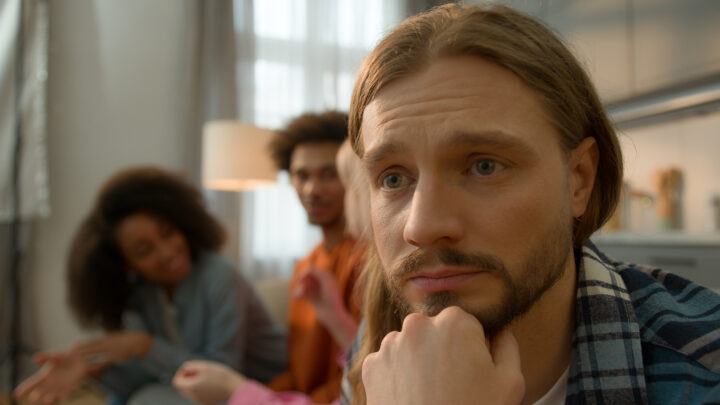
Social anxiety tends to show up earlier in life, often during childhood or teenage years when peer approval becomes important. It grows from worries about fitting in and being judged by everyone. Agoraphobia more often develops later, sometimes after experiencing panic attacks. It’s less about social growth and more about environments gradually feeling unsafe.
Agoraphobia limits mobility.
When agoraphobia is severe, travelling far from home feels impossible. Even simple errands can feel overwhelming because the anxiety is tied to distance, exits, or crowds. Social anxiety usually allows mobility as long as direct interactions are limited. For example, someone might shop comfortably alone but feel anxious if they need to talk to a cashier.
Social anxiety impacts performance situations.
Giving presentations, interviews, or even answering questions in a group are common struggles for people with social anxiety. The fear of being watched and judged makes performance situations particularly tough. For agoraphobia, the stage itself isn’t the issue. If the same person were performing safely at home online, for example, they might feel fine because it’s the environment rather than the audience that drives the fear.
The thought patterns differ.
Agoraphobia thoughts often circle around “What if I can’t escape?” or “What if I panic here?” The focus is on safety and physical control of the environment. Social anxiety thoughts lean more toward “What if I embarrass myself?” or “What if they don’t like me?” The focus is on how other people see you rather than on escaping the setting.
Both can overlap.
It’s possible to experience both conditions at the same time. Someone might avoid crowded spaces because of agoraphobia, and also feel anxious about speaking to strangers because of social anxiety. That overlap makes things confusing, which is why distinguishing them can help. Understanding the main trigger which might be people or places often brings clarity about which one plays the bigger role.
Professional support helps with both.
Whether it’s agoraphobia or social anxiety, both can make life feel smaller. Left unchecked, avoidance grows, and that’s why support can make a big difference. Talking to a professional provides tools to face fears gradually. While the roots differ, both conditions can be eased with guidance, showing that help is possible, no matter which one you’re dealing with.
If you or someone you know is struggling, Samaritans is available 24/7 at 116 123.