Being comfortable in your own company and actually enjoying it is one of the best skills you can develop in life.

Spending time solo should feel relaxing and restorative, but that’s not the case for everyone, unfortunately. If it stirs up tension instead of a feeling of calm and contentedness, that’s usually a sign you’re not fully comfortable in your own company yet. Here are some of the most common feelings that often give it away.
If these are all too familiar to you, it’s worth working on getting to know and love yourself a bit more so that you can take pleasure in being on your own, at least some of the time.
You feel restless after a short while.

When you’re not used to being alone, silence can make you twitchy. You start pacing, scrolling, or wanting some sort of noise because stillness feels wrong rather than restful. You keep looking for distractions so you don’t have to be stuck with just your own thoughts.
Try letting boredom happen without rushing to fix it. Restlessness softens when you stop fighting it, and that’s when genuine calm starts to show up.
You keep checking your phone all the time.

If you can’t go five minutes without refreshing something or sending a random text, it’s not really solitude. Again, it’s distraction. You’re searching for small hits of connection to fill the quiet instead of relishing it, and that’s a change.
Put your phone somewhere you can’t reach it. Once that automatic checking urge eases off, you’ll start noticing what your mind actually wants to do when no one’s watching.
You overanalyse everything.

Time alone can feel like a spotlight on every tiny worry. You replay conversations, second-guess choices, and spiral into thoughts that wouldn’t surface if someone else were there.
It helps to give your brain something gentle to focus on, like walking, tidying, or cooking. You’ll still think, but it becomes background rather than interrogation.
You feel lonely even when you’re fine.

You might start convincing yourself something’s wrong just because you’re not talking to anyone. Loneliness can sneak in as a story rather than an actual need.
Instead of chasing company, remind yourself that missing people and missing comfort aren’t always the same thing. Sometimes you just need to settle into the silence.
You start doubting your choices.

When it’s just you, your confidence can wobble. You might find yourself rethinking things you were sure about, simply because there’s no one there to confirm them.
Solitude tests self-trust. The more you practise sitting with your own judgement, the easier it becomes to stand by it when life gets loud again.
You fill the space with noise.

Music, podcasts, TV, anything to stop the silence from feeling too big. It’s less about entertainment and more about muting your own thoughts.
Try leaving gaps between the noise. You might notice that silence stops being intimidating once you stop treating it like something that needs covering up.
You feel guilty for doing nothing.

Alone time often triggers guilt, as if you should be productive or social instead. Rest starts feeling like laziness when you’ve tied your worth to constant doing.
It helps to reframe stillness as recovery, not waste. Your body and brain both need downtime to reset, even if it doesn’t look useful on the surface.
You crave validation out of nowhere.
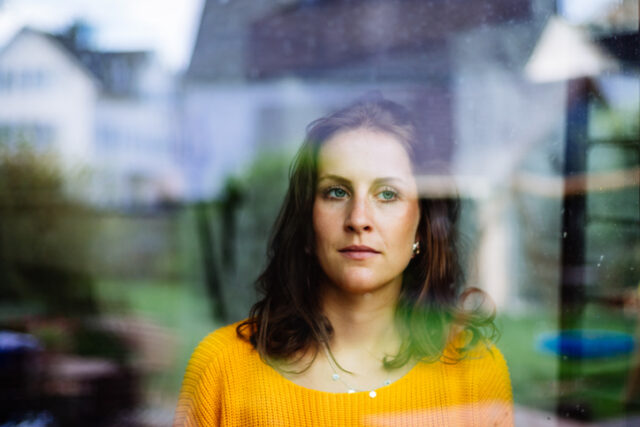
Without external feedback, you might start posting more, texting more, or over-sharing small wins. It’s your way of checking you still matter when no one’s around.
Try keeping small victories to yourself for a bit. It builds quiet confidence, the kind that doesn’t rely on applause to feel real.
You replay old conversations in your head over and over.

Silence can turn into a loop of what-ifs. You might dig up awkward moments or things you wish you’d said differently, purely because there’s nothing new to distract you.
It helps to remember those moments already ended. Once you stop treating the past as something you can edit, you free up space to think about what’s next.
You rush through tasks.

Some people speed through chores just to reach the next distraction. You might convince yourself you’re being efficient, but it’s usually avoidance wearing a mask of productivity.
Try slowing down small tasks like making tea or folding clothes. Doing things at a calmer pace helps your brain realise there’s no emergency in being still.
You feel like you’re missing out on something all the time.

Even if nothing’s happening, your brain can whisper that everyone else is living a better moment somewhere else. That sense of being left behind can ruin a perfectly peaceful evening.
When that kicks in, remind yourself no one’s life is thrilling all the time. Real rest happens when you stop measuring your day against someone else’s highlight reel.
You start talking yourself out of plans.

Being alone can make you hesitant to do solo things in public. You might skip meals out or walks because it feels awkward without company.
The fix is gentle exposure. Try small solo outings, a coffee, a park bench, a short trip. Each one proves the world isn’t judging as harshly as you think.
You only relax when someone comes back.

If peace returns the moment another person appears, your comfort depends on their presence, not your own. That’s a sign your self-soothing muscle needs work.
Start by treating alone time like any skill, awkward at first, smoother with use. The more you practise, the less it feels like absence and more like ease.