Experiencing emotional neglect as a kid doesn’t necessarily mean you were miserable or abused.

More often than not, it tends to be a lot subtler than that. Maybe it was the lack of hugs, the brushed-off feelings, or the sense that you had to deal with life on your own even when you were small that left you feeling so empty. It’s subtle and easy to miss, especially if your basic needs were met and nothing looked “wrong” from the outside. Nevertheless, it still affects you. If any of these sound familiar, you might be realising now what was desperately missing back then.
You find it nearly impossible to name what you’re feeling.

You feel something, but you can’t quite label it. Is it anger? Sadness? Mild dread mixed with a side of guilt? Who knows. Emotional neglect often means no one helped you learn how to make sense of your inner world, so now it all feels a bit scrambled. It’s not that you don’t feel things, it’s that no one ever sat down and said, “Hey, this is what that might be.” So now you’re trying to build your own emotional dictionary in adulthood, one weird feeling at a time.
You act like your own needs are no big deal without thinking.

Need a break? You push through. Feel overwhelmed? You tell yourself it’s not that bad. You’ve probably trained yourself to ignore your own signals because growing up, no one else seemed to notice them either. This doesn’t make you weak; it makes you someone who learned that needing things wasn’t really allowed. The hard part now is learning that it’s safe to need, rest, or just admit you’re not fine without guilt creeping in.
You get uncomfortable when people ask how you are.

“I’m fine!” you say too quickly, even when you’re clearly not. Honest check-ins feel weirdly invasive, and your first instinct might be to deflect or turn the focus back on the other person. If no one really asked, or genuinely cared, about how you were doing as a kid, that question can still feel loaded. Being seen feels a bit like standing under a spotlight, even when all they’re doing is being kind.
You find it hard to ask for help (even when you really need it).

Even when you’re drowning, you’ll still say, “I’ve got it.” Emotionally neglected kids often grow into adults who see asking for help as weakness or failure, not just a normal part of being human. You might even feel embarrassed for needing support. However, that self-reliance isn’t always strength. Really, it’s a leftover survival skill. The real strength now is learning that letting people in doesn’t mean you’re a burden.
You feel weirdly guilty when you’re upset.

You can be mid-meltdown and still feel bad for having “too many” feelings. Somewhere along the way, you learned that expressing emotion = causing problems. So now even your tears come with a side of apology. That guilt likely means no one made space for your emotions when you were younger. You were probably expected to be “easy,” and now you’re having to unlearn that to feel things properly.
You’re weirdly good at pretending everything’s okay.
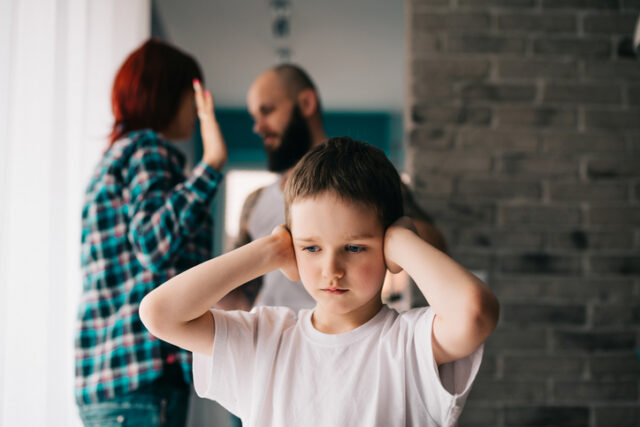
Your world could be falling apart, and you’d still smile, show up, and tell people “it’s all good.” Emotionally neglected kids become masters of masking. You learned early that no one was coming to check on you anyway, so why show the cracks? This might make you look “strong” or “resilient,” but underneath, you might feel really alone. The skill of hiding isn’t bad, but it’s okay to start letting a few safe people see the real you underneath it now.
You’re more comfortable supporting other people than being supported yourself.

You’re the one who remembers birthdays, checks in on your friends, gives the best pep talks. But when it’s your turn to be vulnerable, you suddenly don’t know how to receive that same energy back. This can come from growing up in a space where emotional care wasn’t modelled or offered to you. So you became the caregiver, even before you were old enough to know that wasn’t your job. It’s okay to need the same care you give.
You overthink every decision, even small ones.
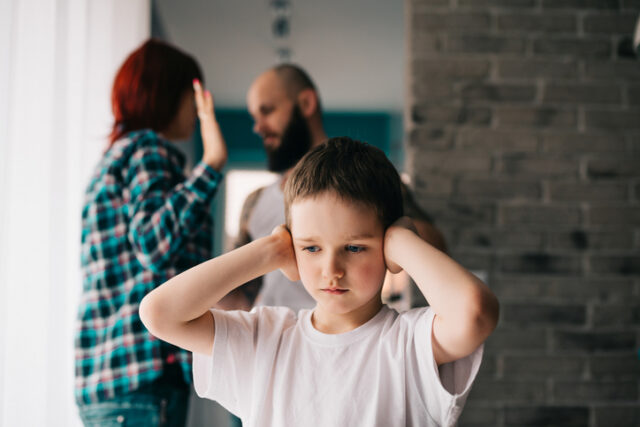
Do you want pizza or pasta? Doesn’t matter, you’ll spiral either way. Emotionally neglected kids often didn’t get space to develop trust in themselves. Now, even choosing a dinner order can feel like a test. You’re not indecisive; you were just never taught that your opinions were valid. The good news is that confidence is a skill, and it’s something you can start building now, one overthought takeaway at a time.
You don’t really know what your needs are.

Forget expressing them—you’re not even sure what they are half the time. Do you need rest? Reassurance? A snack and a nap? You’ve spent so long tuning out your own internal cues that they’ve started whispering instead of yelling. This is common if you had to be “low maintenance” growing up. Luckily, the more you start paying attention to what feels good, what doesn’t, and what you crave (emotionally or otherwise), the easier it gets to tune back in.
You brush off compliments like they’re awkward.

Someone says you look nice, and you immediately respond with a joke, a deflection, or a full-on denial. Compliments don’t land; they bounce off because they don’t quite match the version of you that you’re used to holding inside. Your discomfort with praise tends to be a result of being emotionally seen or affirmed as a kid. You learned to be suspicious of positive attention, or to assume it’s a setup. Learning to just say “thank you” is surprisingly hard, but really healing.
You minimise your own struggles.

Someone could say, “That sounds really hard,” and your instinct is to say, “Oh, it’s nothing.” You’re not trying to be tough; you’re just so used to your pain being overlooked that it doesn’t even register as valid anymore. This habit comes from years of quietly coping. But here’s the thing: just because you got through it doesn’t mean it wasn’t heavy. You’re allowed to say, “Yeah, that actually was a lot.” Even if no one else said it at the time.
You often feel like you’re “too much” for people.

You over-apologise, tone yourself down, or second-guess your excitement. There’s a subtle belief somewhere in you that if you show up fully, people will leave, or at least wish you’d chill out. That belief doesn’t come from nowhere. It often forms when your early feelings were ignored, mocked, or treated like a nuisance. However, the people who are right for you won’t see you as “too much.” They’ll just see you.
You struggle with trust, even when there’s no reason to.

You want to trust people, but there’s always a tiny voice saying, “Be careful.” Even when someone’s kind and consistent, part of you is braced for the moment it flips. That hypervigilance is a classic hangover from emotional neglect.
If your early experiences taught you that people aren’t emotionally safe, your brain doesn’t just forget that because you’re older. But trust can be rebuilt slowly, one safe experience at a time. You’re not broken; you’re protecting yourself the best way you knew how.
You’re overly independent, even when you don’t want or need to be.

You’d rather carry it all yourself than risk leaning on someone else. It’s not because you love doing it all alone, but because depending on other people feels unfamiliar, and a bit risky. That deep-rooted self-sufficiency often started as a coping mechanism. When you had to rely on yourself emotionally, it stuck. However, you don’t have to prove your strength by doing life solo. You’re allowed to share the weight.
You’re unsure what love is supposed to feel like.

Affection feels confusing, support feels suspicious, and when someone genuinely shows up for you, part of you wonders if they’re faking it or if there’s some hidden cost. Emotional neglect leaves you guessing about what love even looks like in action. That doesn’t mean you can’t find real connection. It just means you might have to unlearn a few old ideas first, like the belief that love is cold, distant, or conditional. Real love doesn’t make you perform for it. It meets you where you are.
You feel responsible for how other people feel.

Someone else is sad? You’re already trying to fix it. Someone’s angry? You immediately wonder what you did wrong. That emotional over-responsibility is often a leftover from childhood, where your job was to keep the peace, not express yourself. That’s probably because you learned to put other people’s needs first because yours weren’t being met. But now, it’s safe to let go of that pressure. You’re not in charge of anyone else’s emotional world but your own.
You didn’t realise any of this until adulthood.

You might have thought your childhood was “fine.” You had food, clothes, and no one was yelling. It’s only now, years later, that you’re realising how emotionally starved you actually felt, and how normal you made that feel.
This realisation can be a bit jarring, but also freeing. You weren’t broken. You were just overlooked. And now that you see it for what it was, you can start to give yourself the things you didn’t get back then, starting with patience, care, and emotional room to grow.