Tantrums are absolutely exhausting for everyone involved, and watching your usually lovely child have a complete meltdown can leave you feeling helpless and frustrated. The good news is that tantrums are completely normal parts of child development, and there are proven strategies that can help you navigate these stormy moments and teach your child healthy ways to handle big emotions.
1. Stay calm and regulate your own emotions first.
When your child is screaming and throwing themselves on the floor, every instinct tells you to either join the chaos or shut it down immediately. However, children look to adults for emotional cues during overwhelming moments, and if you’re panicking or getting angry, it escalates their distress rather than calming it.
Take a few deep breaths and remind yourself that this is temporary—tantrums always end eventually. Your calm presence is the most powerful tool you have for helping your child regulate their emotions and learn that big feelings aren’t dangerous or catastrophic.
2. Don’t try to reason with a child mid-meltdown.
During a tantrum, your child’s brain is flooded with stress hormones and their logical thinking centres are essentially offline. Trying to explain why they can’t have a biscuit or negotiate about bedtime when they’re mid-scream is like trying to have a rational conversation with someone who’s having a panic attack.
Save the explanations and problem-solving for after the storm has passed, when your child’s nervous system has calmed down. During the tantrum itself, focus on safety and comfort rather than teaching moments or logical discussions about behaviour.
3. Use a calm, quiet voice and simple words.
Shouting over your child’s tantrum or matching their emotional intensity only adds fuel to the fire and teaches them that big emotions require big reactions. Instead, lower your voice to just above a whisper and use short, simple phrases that acknowledge their feelings without judgement.
Try saying things like “I can see you’re really upset” or “This is hard for you” in a gentle tone. Your quiet voice often draws children’s attention more effectively than loud commands, and it models emotional regulation during difficult moments.
4. Provide comfort without giving in to demands.
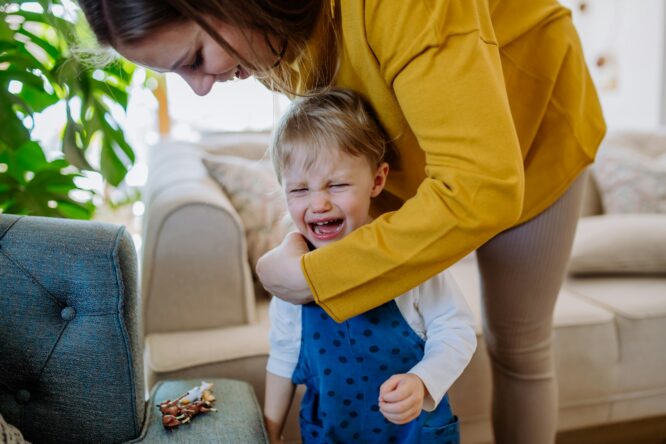
There’s a crucial difference between comforting your child during a tantrum and rewarding the behaviour that led to it. You can offer physical comfort, acknowledge their feelings, and stay close while still maintaining the boundary that triggered the tantrum in the first place.
That might mean sitting nearby as they cry about not getting a toy, offering a cuddle without changing your “no” to a “yes,” or validating their disappointment while also sticking to the limit you’ve set. Comfort doesn’t mean capitulation.
5. Don’t take the tantrum personally or as a reflection of your parenting.
Tantrums often feel like personal attacks, especially when your child screams things like “I hate you” or “You’re the worst parent ever” in public places. These words come from an overwhelmed, dysregulated brain and don’t reflect their true feelings about you or your relationship.
Remember that children typically have their biggest meltdowns with the people they feel safest with; it’s actually a sign that your child trusts you enough to fall apart in your presence. Good parents have children who have a tantrum; it doesn’t mean you’re doing anything wrong.
6. Keep everyone safe, but avoid physical restraint unless necessary.
Safety is paramount during tantrums, but physically holding or restraining a thrashing child often escalates their panic and can make the situation worse. Instead, create a safe space by moving dangerous objects away and ensuring there’s soft flooring or walls nearby.
Only use physical intervention if your child is genuinely at risk of hurting themselves or others people Most tantrums look dramatic but aren’t actually dangerous, and children often calm down faster when they feel they have some control over their own body during the meltdown.
7. Ignore the audience and don’t worry about other people’s judgements.
Public tantrums feel mortifying because you’re acutely aware of other people watching and potentially judging your parenting. This social pressure often leads parents to handle tantrums differently in public than they would at home, which confuses children and can actually prolong the behaviour.
Remind yourself that most adults have either been parents or were children themselves, so they understand that tantrums happen. Focus on your child’s needs rather than managing other people’s opinions, and handle the situation exactly as you would if you were at home.
8. Validate feelings but also maintain boundaries.

Children need to learn that all feelings are acceptable, but not all behaviours are okay. You can acknowledge your child’s disappointment, anger, or frustration while still holding firm on reasonable limits and expectations about how they express these emotions.
This sounds like “You’re really angry that we have to leave the playground, and it’s okay to feel angry. It’s not okay to hit me. Let’s find a better way to show your mad feelings.” This teaches emotional intelligence but also maintains important behavioural boundaries.
9. Don’t threaten punishments or consequences during the tantrum.
Making threats or discussing consequences while your child is in full meltdown mode is ineffective because they can’t process that information properly when they’re emotionally overwhelmed. It also tends to escalate the situation rather than resolve it.
Wait until everyone has calmed down before addressing any inappropriate behaviour that happened during the tantrum. Children learn better from consequences when they’re delivered calmly and can actually understand the connection between their actions and the results.
10. Offer choices when possible to restore some sense of control.
Many tantrums stem from children feeling powerless or having no control over their environment and circumstances. Once the initial intensity has passed, offering small choices can help them regain composure and feel more autonomous.
These might be simple options like “Would you like to calm down in your room or the living room?” or “Do you want a hug or some space right now?” Having some control, even over small things, can help children move out of tantrum mode more quickly.
11. Don’t try to distract or immediately cheer them up.

While distraction might temporarily stop a tantrum, it doesn’t teach children how to actually process and cope with difficult emotions. Rushing to cheer them up or immediately offering fun alternatives sends the message that sad or angry feelings are problems to be fixed rather than normal human experiences.
Allow your child to feel their feelings fully and work through them naturally. This builds emotional resilience and teaches them that they can survive difficult emotions without needing immediate rescue or entertainment.
12. Follow up with connection and learning after everyone’s calm.
Once the tantrum has passed and everyone’s emotions have settled, this is the time for gentle conversations about what happened and alternative ways to handle similar situations in the future. Your child’s brain is now ready to learn and process information.
Focus on reconnection first, maybe through a cuddle or doing something enjoyable together, before discussing the tantrum. Then you can explore what they were feeling, validate those emotions, and brainstorm better ways to communicate their needs next time without being punitive or lecturing.