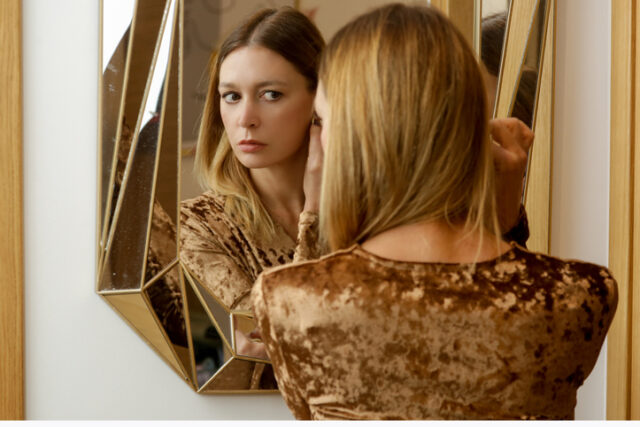
Most people have absolutely no idea how attractive they actually are to other people, and the gap between how we see ourselves and how other people see us can be hilariously huge. Your brain plays tricks on you when it comes to your own appearance, creating a distorted self-image that’s usually either way too harsh or occasionally way too generous, but rarely anywhere close to accurate.
1. You see yourself in reverse every morning.
The face you’re most familiar with is the mirror image of what everyone else sees, which means you’re literally judging yourself based on a backwards version that doesn’t match reality. When you see photos of yourself, they often look “wrong” because you’re seeing your actual face instead of the flipped version you’re used to.
Try using your phone’s front camera occasionally instead of mirrors to get a better sense of how people actually see you. The shock of seeing your non-reversed face will wear off, and you’ll get a more accurate picture of your actual appearance.
2. Your brain focuses on flaws that other people barely notice.
You spend way more time scrutinising your own face than anyone else does, so you become hyper-aware of tiny imperfections that other people either don’t see or don’t care about. That pimple that feels huge to you is probably invisible to everyone else who isn’t staring at your face from six inches away.
Remember that other people see your face as part of your whole person in motion, not as a still life they’re examining for flaws. Your overall energy and personality matter way more than the tiny details you obsess over.
3. You judge yourself against edited and filtered images.
Your standard for attractiveness has been warped by seeing countless airbrushed photos, filtered selfies, and professionally lit images that don’t represent how anyone actually looks in real life. You’re comparing your normal human appearance to digitally enhanced versions of beauty that don’t exist.
Limit your exposure to heavily edited images and seek out more authentic representations of beauty to reset your expectations about what normal attractive people actually look like in real life.
4. Your mood completely changes how you see yourself.
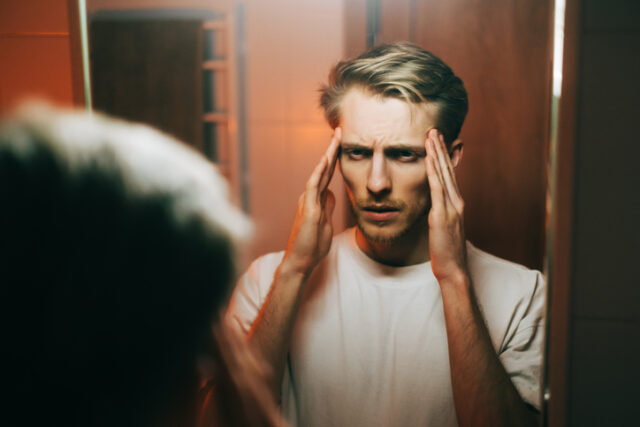
When you’re feeling confident and happy, you look better in mirrors and photos than when you’re tired, stressed, or having a bad day. Your emotional state literally affects your perception of your own attractiveness, creating wildly inconsistent self-assessments.
Notice how your self-perception changes based on your mood and energy levels. Don’t just assume these fluctuations reflect actual changes in your appearance. You look pretty much the same, regardless of whether you feel good or bad about yourself.
5. You’re terrible at reading your own expressions.
The face you make when looking in mirrors or taking selfies isn’t your natural expression, and it’s usually not particularly flattering. You’re unconsciously making a slightly tense, self-evaluating face that doesn’t represent how you look during normal interactions with other people.
Ask friends to take candid photos of you during conversations or activities to see how you actually look when you’re not performing for a camera or mirror. These natural expressions are usually much more attractive than your self-conscious mirror face.
6. Attractiveness includes movement and personality.
Static images can’t capture the way you move, laugh, gesture, or express yourself, all of which contribute significantly to how attractive people find you. Someone might look ordinary in photos but be incredibly appealing in person because of their energy and mannerisms.
Focus on developing your conversational skills, sense of humour, and personal style rather than just analysing your static features. The dynamic aspects of attractiveness often matter more than whatever you see in selfies.
7. Your self-criticism is way harsher than other people’s judgement.
The voice in your head that comments on your appearance is usually much more critical than what anyone else is thinking about how you look. Other people are generally more generous and less focused on physical flaws than you are when evaluating yourself.
Try to talk to yourself about your appearance the way a kind friend would, rather than using the brutal internal commentary that serves no useful purpose. Most people are far less judgemental about other people’s looks than they are about their own.
8. You have no idea what your “type” actually is.
Everyone has different preferences when it comes to attraction, and you might be exactly what many people find appealing, even if you don’t match conventional beauty standards or your own ideals. Your insecurities about certain features might be completely irrelevant to people who find those traits attractive.
Accept that you can’t control or predict what everyone else will find appealing about you, and focus on presenting yourself authentically instead of trying to conform to generic beauty standards that don’t account for individual preferences.
9. You remember bad photos more than good ones.
Unflattering photos stick in your memory much longer than attractive ones because your brain gives more weight to negative information about yourself. This creates a distorted self-image based on your worst photographic moments, not a balanced view of your actual appearance.
Make an effort to notice and remember times when you looked good in photos or received compliments about your appearance. Your brain naturally downplays positive evidence, so you need to consciously counteract that tendency.
10. Confidence affects how everyone sees your attractiveness.
People who feel good about themselves tend to be perceived as more attractive regardless of their objective physical features, while insecurity and self-consciousness can make even conventionally attractive people seem less appealing. Your attitude about yourself influences how everyone sees you.
Work on feeling comfortable in your own skin rather than trying to fix perceived flaws. Confidence and self-acceptance are attractive qualities that can majorly improve how other people respond to you.
11. You’re comparing yourself to the wrong people.
Your reference points for attractiveness might be completely unrealistic for your age, lifestyle, or circumstances. Comparing yourself to people with professional styling, perfect lighting, and genetic advantages creates impossible standards that no normal person can meet.
Choose more realistic comparison points by looking at attractive people in your actual social circle, age group, and lifestyle rather than celebrities or social media influencers who have professional beauty support.
12. You underestimate how much grooming and style matter.
Good hygiene, flattering clothes, and personal style can make almost anyone more attractive, but these factors are often overlooked when people focus on unchangeable physical features. How you present yourself often matters more than your basic bone structure or natural features.
Invest time and energy in grooming, clothing that fits well, and developing your personal style instead of fixating on features you can’t change. These controllable factors have huge impact on how attractive you seem to the people around you.